Bank of England raises interest rate to 4%: what it means for households
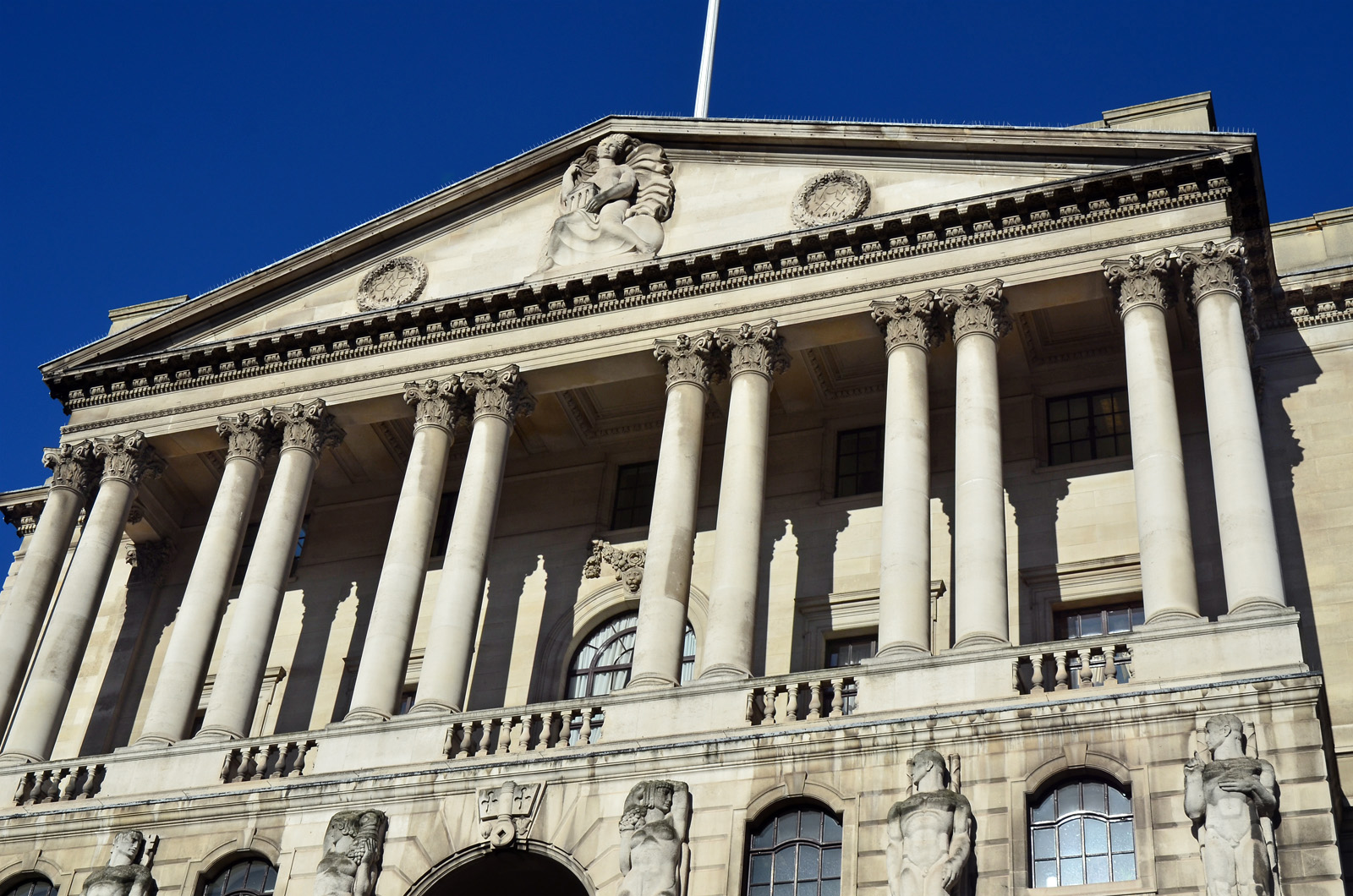
On 5 November the Bank of England (BoE) Monetary Policy Committee (MPC) announced that Bank Rate is rising from 3.75% to 4%. The vote was 8-1: Catherine L Mann wanted to raise the rate to 4.25%. The Bank bases its decision on rising energy prices and on inflation, which reached 3.5% in September and, according to BoE forecasts, will rise to around 5% by the middle of 2027. We look at what this means for households with a mortgage.
What has been decided and why
The Committee's meeting ended on 4 November. The rate has been raised by 0.25 percentage points. It had been 3.75% since 18 December 2025. At the September meeting the Committee voted 6-3 to leave the rate unchanged, but three members were already proposing 4% at that time.
The BoE announcement states that the conflict in the Middle East is now in its ninth month and that global energy prices, already high, have continued to rise. According to the ONS, consumer price inflation (CPI) rose to 3.5% in September (from 3.1% in August). Transport, and fuel in particular, did most to push it up. The BoE estimates that the direct effect of energy prices accounted for around 1 percentage point of September's inflation.
The Bank acknowledges that there is so far little evidence of effects on other prices and on wages. Even so, in the Committee's view the inflationary pressure that has already built up is enough to justify raising the rate, and data on economic activity in recent months have been stronger than expected. The BoE forecasts that inflation will be around 4.5% in the first quarter of 2027 and around 5% in the second quarter. The Bank's inflation target is 2%.
What this means for households
The BoE explainer states that higher interest rates mean bigger payments on many mortgages and other loans. When Bank Rate rises, banks usually also raise the interest they pay on savings.
The minutes of the November meeting note that benchmark two-year mortgage rates have risen by nearly 50 basis points since the beginning of September, and that new mortgage approvals have been falling.
Our calculation, not BoE figures. Suppose someone has a £200,000 repayment mortgage over 25 years, and its interest rate rises from 4.50% to 4.75%. These rates are illustrative, not market data:
- The monthly payment would rise from £1,111.66 to £1,140.23, that is, £28.57 a month more.
- On an interest-only mortgage, the payment would rise by £41.67 a month.
The actual amount depends on the terms of the individual loan (our explanation).
What Committee members say
The chair of the Monetary Policy Committee (MPC), Andrew Bailey, writes in the minutes: “In view of the news, the case is clear for a 25-basis point rise now. Without news which softens the risks to inflationary pressures, I can see the argument for a further increase in rates”.
Huw Pill takes a similar view: “a single 25-basis point hike is unlikely to be sufficient.”
Alan Taylor sees the situation differently: “this is not the start of a hiking cycle”. In his view, the next move could be a rise, a cut or no change. The BoE stresses that monetary policy is not on a pre-set path.
What comes next
- Next decision. The BoE will announce its next interest rate decision on 17 December 2026.
- Inflation figures. The ONS will publish the next consumer price inflation figures on 18 November 2026.
“Londono Žinios” will report on further Bank of England decisions.
Based on: the Bank of England “Monetary Policy Summary and Minutes, November 2026” (5 November 2026, https://www.bankofengland.co.uk/monetary-policy-summary-and-minutes/2026/november-2026); the BoE page “The interest rate (Bank Rate)” (updated 4 November 2026, https://www.bankofengland.co.uk/monetary-policy/the-interest-rate-bank-rate); the ONS bulletin on consumer price inflation for September 2026 (21 October 2026, https://www.ons.gov.uk/economy/inflationandpriceindices/bulletins/consumerpriceinflation/september2026).
Republication must credit Londonozinios.com as the source.
 Security
 Emigration
 Community
 Business